Plan elective surgery only after your body has recovered from childbirth, breastfeeding has ended and your weight and breast size have settled. You will need to weigh future pregnancies, separate skin, fat and muscle concerns, and decide whether one operation or staged treatment fits your health and family responsibilities.
Key takeaways
- Wait at least six months after delivery before elective surgery.
- Finish breastfeeding and confirm your breasts have stabilised before breast surgery.
- Match abdominal treatment to loose skin, fat distribution and muscle separation.
- Plan childcare and several weeks of restricted activity after combined surgery.
When is it too soon after childbirth to plan surgery?
Wait until childbirth recovery is complete before scheduling elective surgery: often at least six months after delivery, with longer recovery after a caesarean if pain, weakness or wound problems continue. A meaningful consultation can happen earlier, but breastfeeding and cosmetic surgery should not be planned together without accounting for ongoing breast changes.
Finish breastfeeding, then allow roughly three to six months for breast size after weaning, breast position and body weight to settle. Breasts can keep changing beyond that window, so an assessment immediately after weaning may not show your final baseline.
Confirm the timing with your surgeon, especially if milk production, weight or breast shape is still changing.
| Decision | Choose this when | Main trade-off |
|---|---|---|
| Postpone surgery | You expect another pregnancy, plan to breastfeed again or your weight and breasts are still changing | You delay contour improvement but reduce the chance of needing revision |
| Consider surgery now | Childbearing is complete, your weight is stable and you accept possible future revision | A later pregnancy can stretch abdominal skin and muscles and alter breast volume and position |
| Discuss timing carefully | You want improvement soon but may become pregnant within the next few years | Pregnancy after mommy makeover is not usually medically prohibited, but it can reduce or undo the result |
Postpone until childbearing is complete when another pregnancy is likely soon. Proceeding makes more sense when the desire for near-term contour change outweighs your willingness to accept a changed result and further surgery later.
Does your health and recovery status support elective surgery?
Elective surgery is reasonable only when your body has recovered and your home life can support recovery. Use this mommy makeover candidacy checklist before choosing a procedure:
1. Confirm stable weight before surgery: keep your weight steady for several months and close to a target you can maintain. A tummy tuck is contouring, not weight loss; major later weight changes can create new looseness.
2. Delay surgery if you have an active infection, including a skin, breast, dental or urinary infection. Your medical conditions must be controlled, and diabetes needs review with the doctor treating it.
3. Test and correct anaemia before surgery. Anaemia and cosmetic surgery combine poorly because low haemoglobin can impair oxygen delivery, energy and wound healing.
4. Check nutrition. Adequate protein, iron, vitamin intake and overall food intake support wound healing; a restrictive diet before surgery can work against recovery.
5. Be direct about smoking and nicotine before plastic surgery. Report cigarettes, vaping, nicotine gum, patches, lozenges and other nicotine products. Nicotine raises infection, skin-loss and delayed-healing risks, so the surgeon may require documented abstinence before and after surgery.
6. Provide every prescription, over-the-counter medicine, vitamin and herbal product, including aspirin, anticoagulants and products that affect bleeding. Mention prior caesarean delivery, abdominal surgery, scars, bulges or hernia symptoms.
7. Plan for permanent scars, possible asymmetry and substantial recovery time. Arrange childcare, lifting help and time away from work, driving and exercise; surgery changes contours, not a guaranteed body image.
Which breast operation matches the change you want?
Choose the operation that fixes the main physical problem, not the breast shape you had before pregnancy. A breast lift after pregnancy reshapes breast tissue, removes excess skin and repositions the nipple, but it does not reliably restore lost upper-pole fullness.
| Option | What it addresses | Key limitation or trade-off |
|---|---|---|
| Breast lift alone | Sagging, loose skin and a low nipple position | Does not reliably add upper-pole volume |
| Breast reduction with lift | Heavy, drooping breasts with neck, shoulder or back symptoms | Removes tissue and skin, which can affect milk production |
| Breast augmentation | Lost volume or asymmetry with relatively firm skin | An implant alone does not reliably correct significant sagging |
| Augmentation with lift | Lost volume plus loose skin or nipple descent | More complex surgery and a greater chance of later revision |
| No breast surgery | Breast changes that are mild or not worth surgical risk | Clothing, time or future pregnancy may remain the preferred solution |
For breast augmentation after breastfeeding, ask whether your breast size has stabilised and whether loose skin, rather than volume, drives the concern. Implants are not lifetime devices; capsular contracture, rupture or deflation, pain, infection, asymmetry and altered sensation can require treatment, replacement or revision.
Discuss future breastfeeding before choosing an incision or technique. Surgery around the areola, tissue removal and some reduction methods can disrupt ducts or nerves and reduce milk production, although many patients can still breastfeed. If another pregnancy is likely soon, no breast surgery or postponement may better protect the result.
How do you match abdominal treatment to skin, fat and muscle?
The assessment separates rectus diastasis versus abdominal fat, loose skin, and a possible hernia. Localised subcutaneous fat is a liposuction problem; overhanging skin is a skin-excision problem; rectus diastasis is muscle separation after pregnancy. A visible midline bulge needs hernia assessment too, because a confirmed hernia may require general-surgical evaluation rather than treatment as diastasis.
| Option | What it addresses | When it fits |
|---|---|---|
| Liposuction | Localised fat | Skin has good elasticity and muscle separation is absent |
| Tummy tuck after pregnancy | Excess lower-abdominal skin and separated abdominal tissues | Skin laxity is substantial and weight is stable |
| Abdominoplasty plus liposuction | Skin excess plus nearby fat | Health, anatomy and the operative plan support combined treatment |
| No operation | Minor skin excess or limited fat | Conditioning or non-surgical treatment meets your goal |
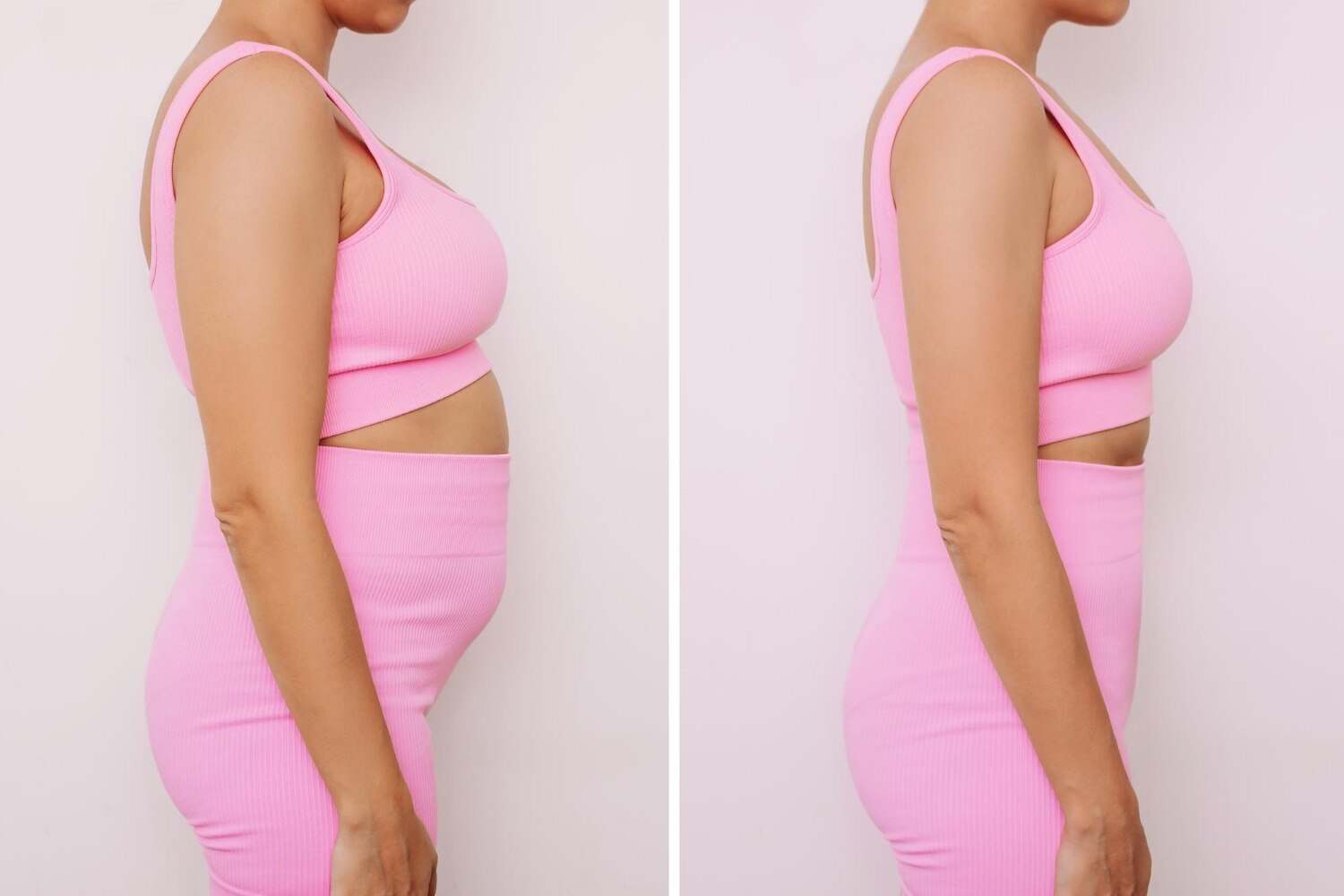
Tummy tuck versus liposuction is not a choice between two equivalent fat-removal methods: liposuction cannot repair separated muscles or tighten loose skin. Using it alone when laxity dominates can leave or worsen skin excess. A tummy tuck is contouring surgery, not weight loss, so complete major weight changes first.
If excess skin is minor and the concern is limited fat, gradual conditioning or non-surgical care may be more appropriate.
A caesarean scar can often be incorporated into the lower-abdominal incision, but surgery cannot erase it or guarantee a barely visible result. Combined treatment adds operative demands and requires individual planning.
What should you expect from a combined operation and recovery?
A combined operation is practical only when your health, procedure extent, facility and blood-clot prevention plan support it. A personalised plan might pair breast surgery, abdominal contouring and selected liposuction; it is not a standard package.
| Choice | Main advantage | Main burden |
|---|---|---|
| Combined surgery | One anaesthetic and one recovery period | Longer surgery, more wounds and greater childcare demands |
| Staged plastic surgery procedures | Smaller operations and more manageable recovery | Separate anaesthetics, costs, scars and time away from work |
| No combination | Lowest immediate surgical burden | Another operation may be needed for untreated concerns |
Your consultation should document each procedure, estimated operating time, anaesthesia, facility, expected hospital stay after mommy makeover, drains and compression garments, pain control, walking schedule and follow-up dates. Ask how circulation will be protected and which symptoms require urgent review.
Longer surgery and multiple wound areas increase demands on wound care and daily help. Blood-clot prevention, early movement and individual risk assessment matter. Arrange another adult for young children, avoid lifting until cleared, and plan time away from driving, work and exercise; combined mommy makeover recovery can disrupt routine for weeks.
Discuss bleeding, infection, seroma, wound separation, blood clots, anaesthetic complications, altered sensation, asymmetry, contour irregularities, implant complications and revision surgery. The safer choice depends on your medical history and the facility’s capability, not marketing.
In Jaipur, Dr Nakul Somani can compare combined treatment with staging, review prior surgery and provide a written recovery and complication plan before you decide.
Related services
Mommy Makeover Get a Breast Lift and Breast Reduction by Undergoing Reduction Mammoplasty at Dr Nakul Somani Clinic You can now get your breast lift and breast... View service → |
Mommy Makeover Get Fuller and Firmer Breasts by Undergoing Breast Augmentation Surgery at Engrace Clinics Argumentation mammoplasty or Breast Augmentation is a... View service → |
Frequently asked questions
When is it too soon after childbirth to plan mommy makeover surgery?
Elective surgery is often delayed until at least six months after delivery. Wait longer if you still have pain, weakness or caesarean wound problems. You can attend an early consultation, but breastfeeding and breast surgery require planning around ongoing breast changes.
How do you know whether your health supports elective surgery?
Your recovery should be complete, wounds should be healed and ongoing pain or weakness should be assessed. Tell your surgeon about breastfeeding, medical conditions, medicines, previous caesarean delivery and any complications before scheduling surgery.
Which breast operation matches the change you want after pregnancy?
A breast lift addresses sagging, while implants add volume. Reduction removes tissue and volume. Some women need a lift with implants when pregnancy caused both drooping and lost fullness.
How do you choose abdominal treatment after pregnancy?
Loose skin, localised fat and separated abdominal muscles require different treatments. Liposuction targets fat, while a tummy tuck removes excess skin and can repair muscle separation. Your examination determines whether one treatment or a combination fits.
What should you expect from a combined mommy makeover operation?
Combining procedures means one operation but a larger recovery. Arrange help with childcare, lifting and household tasks, and follow restrictions on driving, exercise and heavy lifting until your surgeon clears them.
Related services
Cosmetic Surgeries Abdominoplasty What is abdominoplasty (tummy tuck)? An abdominoplasty is a procedure that flattens your abdomen by removing extra fat and skin and tightening... |
Mommy Makeover Liposuction What is Abdominal Liposuction? 1. Preoperative Marking: The surgeons make markings on specific abdominal areas before the procedure. |
Body Contouring Overview of Thigh Plasty Surgery A thighplasty, also known as a thigh lift, is a cosmetic surgical procedure that’s done to tighten and improve the... View service → |
Cosmetic Surgeries Get Fuller and Firmer Breasts by Undergoing Breast Augmentation Surgery at Engrace Clinics Argumentation mammoplasty or Breast Augmentation is a... View service → |