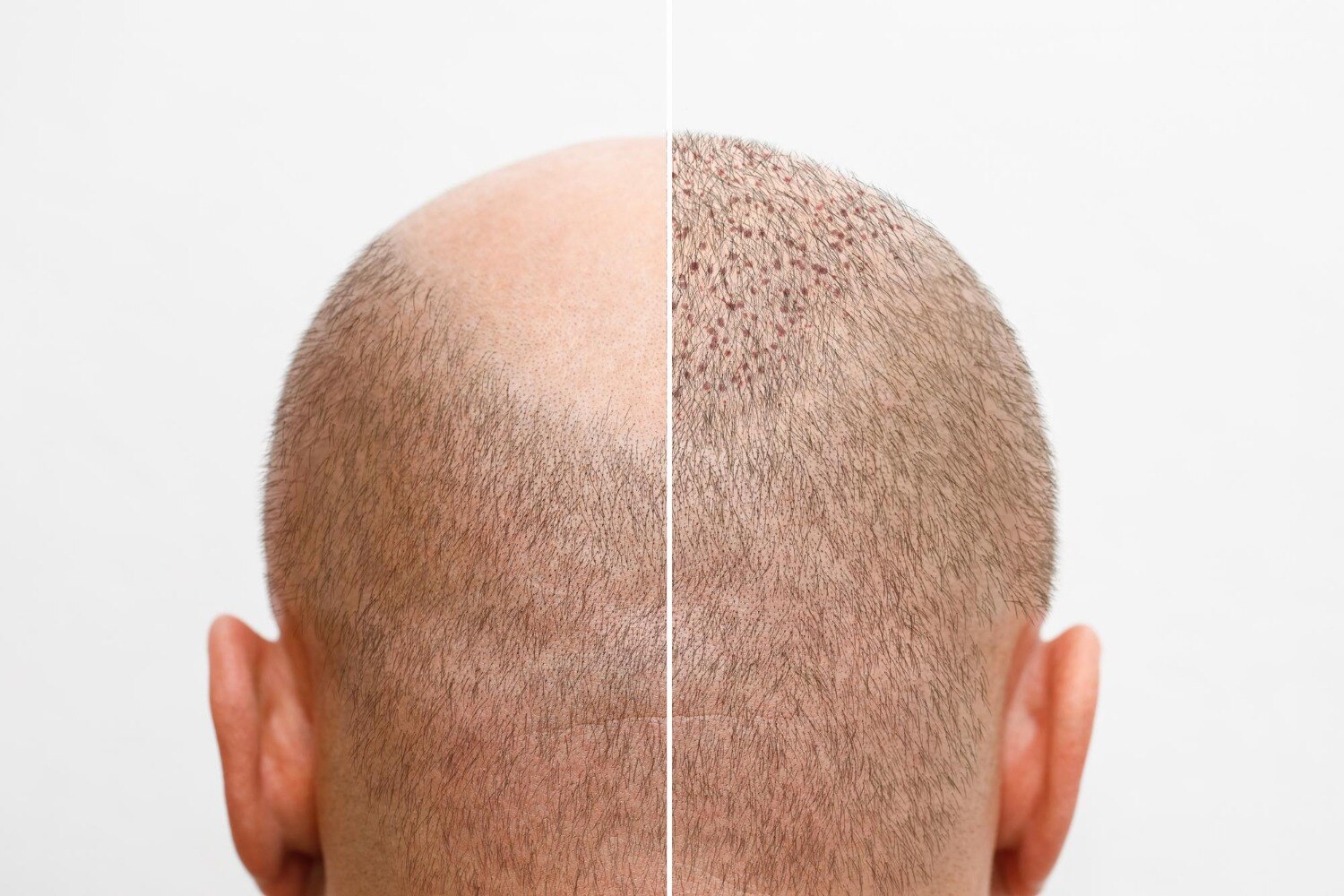
A transplant plan can fail before surgery if the diagnosis is wrong, the donor zone is overestimated, or the hairline is designed without accounting for future loss. By the end, you will know which examinations determine graft availability, how different loss patterns change the design, and when postponing surgery protects your long-term result.
Key takeaways
- Confirm the cause and stability of hair loss before counting grafts.
- Ask how donor density, follicle quality and scalp laxity were measured.
- Plan the hairline, mid-scalp and crown according to visibility and graft limits.
- Reserve donor follicles for future hair loss, not just today’s coverage.
Confirm the Cause and Pattern Before Counting Grafts
A transplant is suitable when hair loss comes from a stable pattern and the donor follicles are likely to remain durable. It is not a cure for ongoing shedding, inflammation or disease: transplantation redistributes existing follicles and cannot create new ones or protect untreated native hair.
1. Confirm the diagnosis. Androgenetic alopecia usually follows a Norwood-Hamilton pattern in men or a Ludwig pattern of diffuse central thinning in women. Telogen effluvium, alopecia areata and inflammatory or scarring alopecias require a different plan; active scarring disease needs control before surgery because inflamed recipient skin can reject grafts or worsen after trauma.
2. Document change over time. Compare scalp photographs, hair-calibre variation and miniaturisation across the hairline, mid-scalp, crown and donor region. Rapidly changing loss, especially in a young patient, can leave transplanted hair as an unnatural island while untreated hair recedes behind it.
3. Treat or stabilise the cause before counting grafts. A clinician may discuss minoxidil or finasteride, but suitability, side effects, pregnancy considerations and monitoring must be assessed individually. Proceeding too soon can waste limited donor hair.
A low, dense hairline is not automatically a good result. Age, facial proportions, hair characteristics and future loss determine its position. Expect temporary shedding, including shock loss in nearby miniaturised hair, and judge the outcome after many months rather than the first few weeks.
How a Surgeon Measures the Donor Zone
Stable donor hair shows little miniaturisation and relatively consistent shaft thickness across the back and sides of the scalp. A surgeon maps a safe donor area rather than assuming the entire horseshoe-shaped fringe will remain permanent.
Trichoscopy, close-up photography and scalp examination reveal changes hidden by ordinary viewing. The clinician checks:
- Hair density in marked zones, recorded as follicles or hairs per square centimetre
- Hair calibre variation, including the proportion of fine or miniaturised shafts
- Thinning along the lower and side borders, which can indicate retrograde or diffuse unpatterned loss
- Scalp laxity, which affects how much tissue can be removed during strip surgery
- Existing scars, inflammation or uneven coverage that could make harvesting visible
- Follicular-unit size, curl and the direction of hair growth
A dense patch does not equal an unlimited supply. The surgeon estimates how many grafts can be removed while keeping the donor area visually full and preserving reserves for future hair loss or another procedure.
The assessment also considers whether the zone has stayed stable over time. If the hair beyond the proposed borders is already becoming finer, harvesting there can transfer follicles that later weaken.
A follow-up examination, comparison with older photographs or medical treatment to stabilise active loss can produce a safer estimate than planning from one appointment alone. Donor hair is more resistant than balding scalp hair, but it is not guaranteed to last forever.
Why the Hairline, Mid-Scalp and Crown Need Different Plans
Graft numbers, angles and density targets change because each scalp zone has a different visual job, hair direction and coverage demand. The hairline creates a facial frame, the mid-scalp carries visual continuity, and the crown must follow a whorl that exposes scalp from several directions.
Graft density is not simply the number placed; hair calibre, curl and scalp contrast change the apparent result.
Hairline design uses fine, often single-hair grafts placed with irregular spacing and a shallow angle that follows existing forward growth. A very low, densely packed line can look artificial and consume grafts needed for future recession. Its position must match your age, facial proportions, hair calibre, donor reserve and likely loss pattern.
The mid-scalp needs dependable coverage behind that frame, so grafts can blend transplanted and native hair instead of creating a hard density boundary. The crown is different: its circular area grows rapidly as diameter increases, while the whorl changes direction and makes coverage appear thinner.
Limited donor supply may favour the hairline and mid-scalp over complete crown filling.
Check these variables before accepting a graft target:
- Native density, shaft thickness, curl and scalp-to-hair contrast: thick, curly hair can look fuller than fine, straight hair at the same count.
- Follicular-unit mix: two- and three-hair grafts provide more coverage than predominantly single-hair units.
- Graft angle and direction: copying the whorl incorrectly wastes grafts and exposes gaps.
- Safe donor capacity: overpacking a small recipient area can impair blood supply and reduce growth.
Protecting a Limited Donor Supply Over Your Lifetime
A younger patient with active recession should not spend the entire calculated donor reserve on one operation. A conservative hairline and staged grafting protect the lifetime donor supply if native hair loss continues behind the transplant.
Age changes the risk calculation, not through a fixed cutoff but through remaining years of possible progression. If recession is still advancing, stabilise the loss and track photographs before committing to a large session; otherwise, later thinning can leave an isolated transplanted band and too few grafts to repair it.
The donor zone is not automatically permanent. Miniaturisation within the donor area, including retrograde thinning along the lower sides and back, reduces the number of reliable grafts. A surgeon should exclude visibly weakening follicles from the estimate rather than count every available hair.
FUE and FUT spend donor tissue differently:
| Method | Main feature | Planning consequence |
|---|---|---|
| FUE | Removes individual follicular units through small punches | Avoids one linear scar, but excessive extraction can cause patchy depletion and injure neighbouring follicles |
| FUT | Removes a strip containing follicular units | Leaves a linear scar, but can preserve surrounding units and suit a larger session |
A first procedure should leave a documented reserve for future progression. Repeated FUE across the same area can create a moth-eaten appearance, while repeated FUT can increase linear scar tension; the best sequence depends on scalp laxity, donor quality and the likely pattern of loss. Reassess native hair before scheduling another session.
What to Resolve During a Personalised Surgical Consultation
The decision should rest on diagnosis, rate of change, donor reserve and recipient-scalp health—not on the bald area alone. At the consultation, ask:
- What diagnosis explains my loss: androgenetic alopecia, alopecia areata, telogen effluvium or scarring alopecia?
- Is my pattern stable enough to operate, or should we document progression first?
- Will finasteride or minoxidil help protect native hair, and what side effects, pregnancy precautions or monitoring apply?
- How many grafts remain safe after allowing for future recession and donor miniaturisation?
Bring dated photographs from the front, top and crown, your medication and illness history, family hair-loss history, and reports from any scalp examination or biopsy. A consultation with Dr Nakul Somani should also address scalp inflammation, previous procedures and whether your donor zone includes retrograde or diffuse thinning.
| Option | What it means | When it applies |
|---|---|---|
| Proceed now | Transplant stable donor follicles into suitable recipient skin | The diagnosis is clear, loss is stable and donor supply supports the long-term plan |
| Stabilise first | Treat or monitor native hair before surgery | Loss is changing, native hairs are miniaturized, or inflammation remains active |
| Choose another plan | Use medical treatment, camouflage or another procedure | Donor supply is inadequate, the diagnosis makes surgery unsuitable, or expectations exceed available grafts |
Ask how postoperative shock loss could affect your existing miniaturized hair and when results can be judged; visible improvement takes months, not weeks. Body-hair transplantation is an additional or salvage resource, not an equal replacement for scalp donor hair.
Related services
Hair Transplant in Jaipur The Ultimate Guide to Hair Transplant: A Life-Changing Solution for Hair Loss and Confidence Restoration Hair loss is a deeply personal experience... View service → |
Hair Transplant Get Hair Restoration Done Successfully at Engrace Clinics with Follicular Unit Transplantation (FUT) Follicular Unit Transplant or profoundly known... View service → |
Frequently asked questions
Why confirm the cause and pattern of hair loss before a transplant?
A transplant redistributes existing follicles, so ongoing shedding, inflammation or disease must be assessed before surgery. A stable pattern gives a more reliable basis for planning.
How is the donor zone measured?
A surgeon assesses donor density, follicle group quality, scalp laxity and the area likely to remain durable. These findings help estimate how many grafts can be removed safely.
Why do the hairline, mid-scalp and crown need different plans?
Each area affects the appearance differently and requires different graft placement and density. The plan must balance visible coverage with the limited donor supply.
How can you protect donor hair over your lifetime?
Avoid using the entire donor reserve in one procedure. Account for future native-hair loss, set realistic coverage goals and discuss how untreated hair will be managed.
What should you resolve during a personalised surgical consultation?
Confirm the diagnosis, donor measurements, graft estimate, target areas, expected density, future-loss strategy and whether additional treatment is needed before surgery.
Related service
Hair Transplant Get Eyebrow Hair Transplantation from Engrace Clinics for Beautiful Eyebrows Nicely aligned and implacable eyebrows that suit the facial structure... View service → |