Choosing an implant involves more than picking a cup size or showing a reference photograph. You will be able to compare implant dimensions, shapes, materials, surgical approaches, candidacy requirements, recovery limits and long-term monitoring before making a consultation more productive.
Key takeaways
- Choose implant size from chest measurements, not a target bra cup.
- Compare implant shape, fill, surface and projection with your anatomy.
- Discuss incision and placement trade-offs, including recovery and future changes.
- Plan activity limits, follow-up checks and long-term implant monitoring.
How Is Breast Implant Size Chosen Beyond Bra-Cup Size?
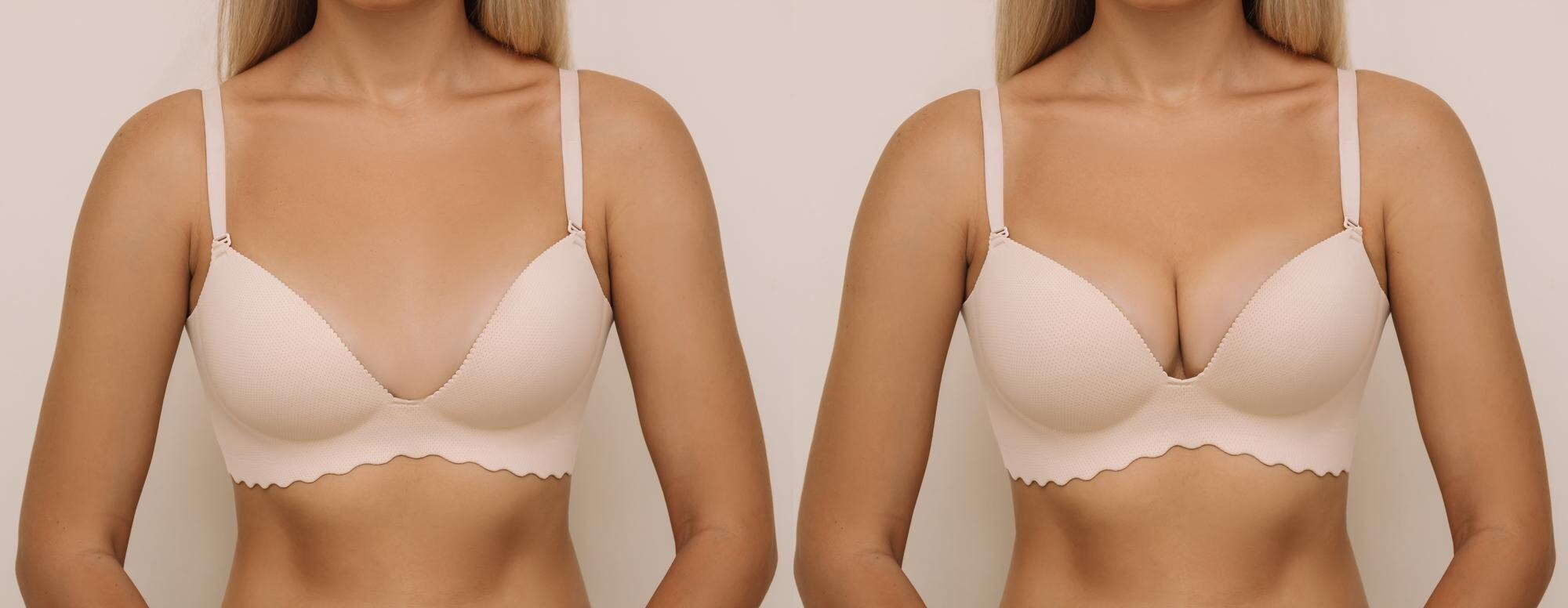
Bra cup size is an unreliable target because the same implant volume in cc can look different on different chests. Surgeons assess implant size against chest measurements, the breast footprint, base width, existing breast-tissue thickness, skin elasticity, nipple position, implant projection and available soft-tissue coverage. The goal is proportion, not a promised cup size.
| Problem | What can go wrong |
|---|---|
| Too wide | The implant can extend toward the armpit, create an overly broad breast or contribute to lateral malposition. |
| Too large | Extra weight can expose edges, increase rippling and stretch skin and supporting tissues, raising the chance of future sagging. |
A larger implant places more load on skin, especially after pregnancy, weight change or aging. Photographs, implant sizers, temporary trial implants and 3D imaging help you compare proportions and projection, but none guarantees the final result; swelling, muscle spasm, high positioning and temporary asymmetry change the early appearance.
Ask how the proposed base width fits your footprint and how much tissue will cover the implant.
How Do Implant Shape, Fill and Surface Affect the Choice?
Round implants can create more upper-pole fullness, but an appropriately sized and positioned round implant can still look natural. Anatomical implants, also called teardrop implants, are designed for a tapered contour; rotation can make the breast lose that intended shape.
| Shape | Main contour | Key trade-off |
|---|---|---|
| Round implants | Fuller upper pole | Natural-looking when proportionate; less concern about rotation |
| Anatomical implants | Tapered, sloping profile | Rotation can distort the intended contour and may require design features to limit movement |
Silicone gel implants feel more like breast tissue than saline implants. Cohesive gel holds together better if the shell breaks, but a silicone-gel rupture can remain silent. Silicone gel implantsia? is an inaccurate search phrase, not a different implant type. Saline rupture is usually visible because the breast loses volume as the fluid is absorbed.
Smooth surfaces do not carry the same textured-surface risk profile. Ask about the exact device, its surface, regulator warnings and known complications before choosing it. Textured implants are associated primarily with breast implant-associated anaplastic large-cell lymphoma, or BIA-ALCL, a rare lymphoma rather than conventional breast cancer.
Persistent late swelling, a mass or pain needs assessment; ultrasound or MRI can investigate, including a suspected silent rupture.
Which Implant Placement and Incision Match Your Anatomy and Priorities?
Thin soft-tissue coverage often favours more implant coverage, but no placement is universally best. Subglandular placement sits above the pectoral muscle; subfascial placement sits beneath the pectoral fascia; submuscular or dual-plane placement adds muscle coverage over all or part of the implant.
More coverage can reduce visible edges and rippling, while muscle movement can cause animation deformity, early pain and a longer recovery.
| Option | Scar and access | Main trade-off |
|---|---|---|
| Subglandular placement | Incision choice determines the scar; direct pocket access | Less muscle-related movement, but edges and rippling show more easily in thin patients |
| Subfascial placement | Similar incision options; access beneath the fascia | Adds a tissue layer without full muscle coverage; settling depends on tissue and pocket |
| Submuscular or dual-plane placement | Usually accessible through an inframammary incision; revision access is predictable | More coverage, but contraction can move the implant and early recovery can hurt more |
| Inframammary incision | Scar lies in the breast fold; broad access and flexible revision | The scar can shift if the fold changes |
| Periareolar incision | Scar follows the areola; direct access through its edge | Can affect nipple sensation or milk ducts more directly than an inframammary incision; breastfeeding outcomes vary |
| Transaxillary incision | Scar sits in the armpit; avoids breast skin | Longer, less direct access can limit revision options |
Placement affects how the implant settles and how clinicians examine breast tissue. Tell mammography staff about implants: implant-displacement, or Eklund, views may be needed alongside standard views.
Who Is a Suitable Candidate and What Happens Before Surgery?
Breast implant candidacy depends on safe tissue coverage and a realistic goal, not a requested cup size. Postpone or reconsider surgery for untreated breast disease, inadequate soft-tissue coverage, active smoking, unrealistic expectations, planned pregnancy, or a preference for a modest change an implant may not deliver.
| Reason to pause | What can go wrong |
|---|---|
| Untreated breast disease | Surgery can delay diagnosis or treatment |
| Thin soft-tissue coverage | Edges, rippling, or malposition become more visible |
| Active smoking | Healing and wound complications increase |
| Planned pregnancy | Breast shape and skin can change afterward |
| Modest desired change | An implant may create more volume than you want |
A preoperative assessment includes breast and chest examination, base-width and tissue measurements, skin elasticity, nipple position, medical and medication history, and a smoking review. Pregnancy testing is performed where applicable.
Baseline mammography, ultrasound, or other imaging depends on your age, symptoms, and personal or family risk; there is no universal test for every patient. A consultation with Dr Nakul Somani in Jaipur can compare these findings with the proposed device, placement, incision, and trade-offs rather than treating the appointment as cup-size selection.
Informed consent should cover capsular contracture, malposition, rupture, BIA-ALCL warnings, revision surgery, and the fact that implants are not lifetime devices. Ask what symptoms require review and how future screening will be arranged.
Related services
Cosmetic Surgeries Get Fuller and Firmer Breasts by Undergoing Breast Augmentation Surgery at Engrace Clinics Argumentation mammoplasty or Breast Augmentation is a... View service → |
Mommy Makeover Get Fuller and Firmer Breasts by Undergoing Breast Augmentation Surgery at Engrace Clinics Argumentation mammoplasty or Breast Augmentation is a... View service → |
What Does Breast Implant Recovery Involve During the First Weeks?
Breast implant recovery involves healing the incision and the implant pocket beneath the breast, not merely waiting for the skin to close. Internal tissues continue repairing after the wound looks settled.
1. Walk short distances early to support circulation. Follow your surgeon’s postoperative restrictions on heavy lifting, strenuous exercise, vigorous upper-body work and pressure on the breasts. Do not drive while taking sedating pain medicine.
2. Expect breast swelling, bruising, tightness and occasional muscle spasm. Implants can sit high, and temporary asymmetry is common while implant settling occurs.
3. Arrange transport home, prepare loose front-opening clothing, keep prescribed medicines available and attend every follow-up visit. These steps make the first days safer and easier.
Do not judge final position or softness immediately. One breast can settle faster than the other, and the result can change as swelling falls and the tissues relax.
Contact your surgical team promptly for persistent or worsening pain, fever, spreading redness, drainage, sudden swelling, breathing difficulty or one-sided enlargement. These symptoms need assessment rather than watchful waiting.
What Long-Term Monitoring and Changes Should You Expect?
There is no automatic 10-year replacement date: implant longevity is individual, and implants have no guaranteed permanent lifetime. As years pass, rupture, capsular contracture, infection, malposition and revision become more likely. Replacement is discussed when symptoms, examination findings, imaging or changing goals justify it—not solely because ten years have passed.
For silicone implant monitoring, updated FDA guidance recommends ultrasound or MRI at 5–6 years after implantation, then every 2–3 years for patients without symptoms. MRI is preferred when ultrasound findings are uncertain or symptoms suggest rupture. Silicone-gel rupture can be silent, unlike saline deflation, which usually causes visible volume loss.
A capsule normally forms around every implant. Capsular contracture occurs when that capsule tightens, causing firmness, pain, distortion or displacement; it can recur after corrective surgery.
Continue age-appropriate breast screening with implants. Tell the imaging centre about them because mammography may require implant-displacement, or Eklund, views as well as standard views. Pregnancy, breastfeeding, weight change and aging can stretch the breast over an intact implant and create a later need for revision.
Contact your clinician if you notice:
- New firmness, pain, distortion or asymmetry
- Sudden swelling, redness, drainage or breast enlargement
- A lump or persistent change in breast shape
Frequently asked questions
How is breast implant size chosen beyond bra-cup size?
Surgeons compare chest measurements, breast footprint, tissue thickness, skin elasticity, nipple position, implant projection and soft-tissue coverage. Implant size is measured in cubic centimetres, and the same volume can look different on different chests.
How do implant shape, fill and surface affect the choice?
Implant shape, silicone or saline fill, projection and surface affect contour, feel, movement and the amount of tissue coverage required. Your surgeon should explain which trade-offs fit your anatomy and priorities.
Which implant placement and incision match your anatomy and priorities?
Placement options include above the chest muscle, partially beneath it or beneath the fascia. Incisions may be made in the breast crease, around the areola or in the armpit; tissue coverage, nipple position, scarring and future surgery influence the choice.
Who is a suitable candidate and what happens before surgery?
A suitable candidate has realistic expectations, stable health and enough information to consent to risks and alternatives. Before surgery, expect a medical history, examination, implant discussion, measurements, photographs, consent and instructions about medicines, smoking and recovery support.
What does breast implant recovery involve during the first weeks?
Early recovery involves swelling, tightness, soreness and restricted lifting or strenuous exercise. Follow wound-care instructions, attend review appointments and return to driving, work and exercise only when your surgical team clears you.