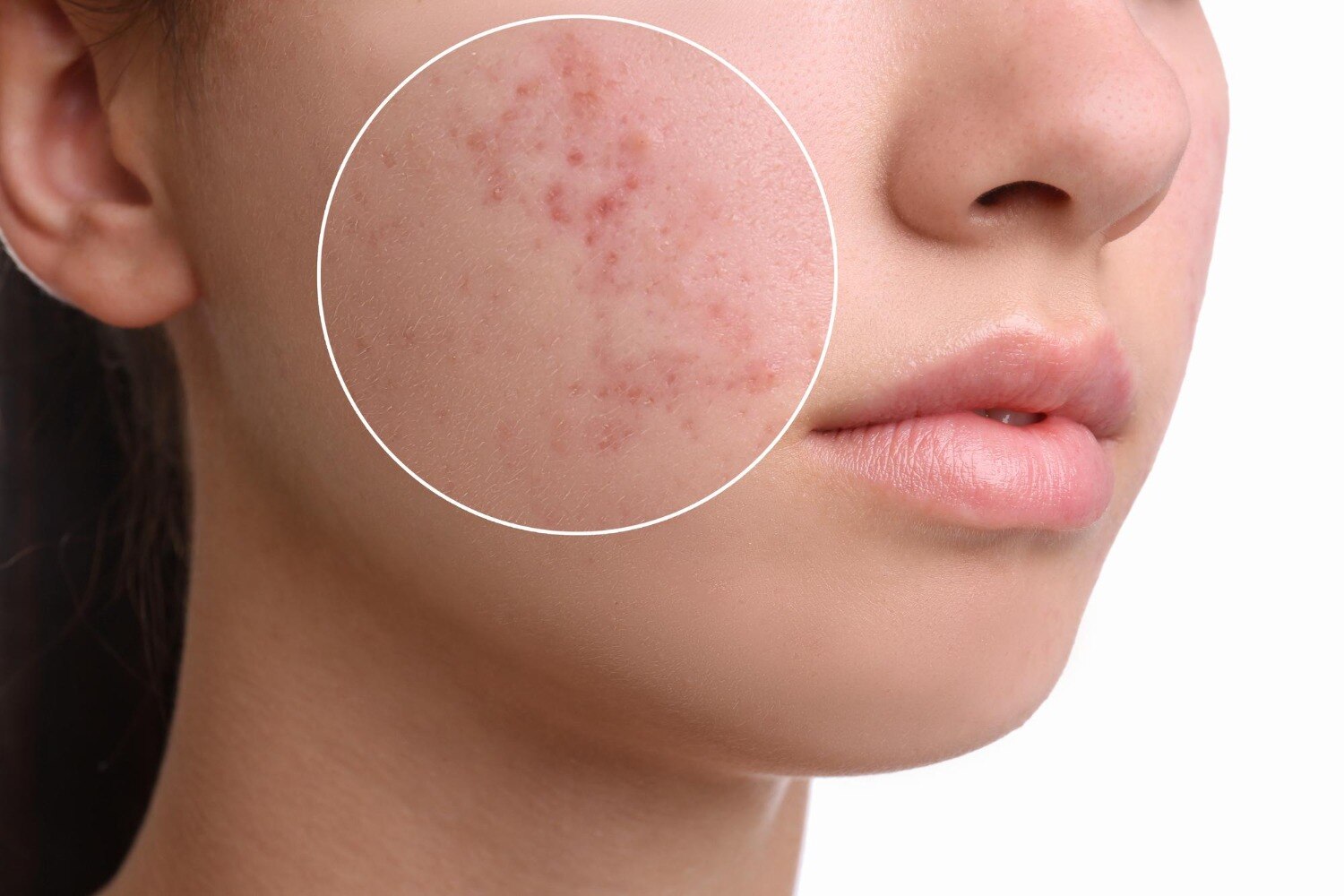
Recurring spots are not always acne, and treating the wrong condition can prolong irritation, dark marks and scarring. By the end, you will know how to identify likely triggers, build a safer treatment sequence, recognise when prescription care is needed and match texture treatment to the type of scar you have.
Key takeaways
- Seek evaluation when bumps itch, flush, match each other, or follow a new medicine.
- Use a consistent daily routine before adding stronger acne treatments.
- Red or brown post-acne marks are not the same as depressed scars.
- Treat uneven texture only after active acne is controlled and diagnosed.
Is It Acne, or a Different Bump-Producing Condition?
Recurring acne usually produces blackheads, whiteheads, red pimples or deeper tender nodules in mixed stages. A different condition becomes more likely when every bump looks alike, itching or flushing dominates, or lesions appear suddenly after a new medicine.
| Condition | Clues that separate it from acne | Check first |
|---|---|---|
| Folliculitis | Small, similar-looking bumps centred on hairs; itching and spread after sweating, shaving or tight clothing | Recent exercise, hair removal, hot tubs and occlusive clothing |
| Rosacea | Persistent central-face redness, flushing, burning and sometimes pus-filled bumps, but no blackheads or whiteheads | Heat, alcohol, spicy food, sun exposure and irritating skincare |
| Perioral dermatitis | Tiny bumps around the mouth, nose or eyes, often with dry scaling; the lip edge is usually spared | Steroid creams, heavy face products, fluoride toothpaste and inhaled steroid use |
| Hormonal acne | Recurring jawline or lower-face lesions that worsen before menstruation | Cycle timing, irregular periods, excess facial hair and sudden adult-onset acne |
| Medication-induced acne | Sudden, uniform bumps on the chest, back or face after starting a drug | Corticosteroids, testosterone, lithium, some seizure medicines and vitamin B12 |
Photograph the eruption and record new medicines, supplements and skincare products before changing several things at once. Seek a clinician’s diagnosis if bumps are painful, scarring, rapidly spreading or fail to improve after removing an obvious trigger. Control active recurring acne before pursuing scar procedures.
Build a Daily Routine Before Adding Stronger Treatments
Treat active acne before treating scars: every new inflamed spot can leave another dark mark or depressed scar. A simple routine also gives your skin time to tolerate effective medicines without creating irritation that looks like worsening acne.
1. Morning: wash with gentle cleansing, apply a non-comedogenic moisturiser, then use broad-spectrum sunscreen with SPF 30 or higher. Sunscreen limits ultraviolet darkening of post-inflammatory red, brown or grey marks.
2. Start benzoyl peroxide at 2.5% once daily on acne-prone areas, rather than only dabbing visible spots. Reduce it to every other day if peeling or burning develops; it can bleach towels and clothing.
3. Add a topical retinoid such as adapalene at night after your skin settles. Use a pea-sized amount for the whole acne-prone area every other night, followed by moisturiser. Do not use adapalene, tretinoin or tazarotene during pregnancy; ask a clinician about alternatives.
4. Choose azelaic acid for acne with lingering dark marks, or salicylic acid for mainly clogged pores. Add only one new active at a time, or irritation will make it difficult to identify the cause.
5. Do not squeeze, scrub or repeatedly extract lesions. Harsh friction increases inflammation and the chance of persistent marks.
Expect fewer new breakouts after 6 to 8 weeks, with clearer improvement over about 12 weeks. If a clinician prescribes clindamycin, use it with benzoyl peroxide rather than alone, because antibiotic-only treatment encourages resistance.
Know When Acne Needs Prescription Treatment
Occasional comedones—blackheads and whiteheads—often respond to a consistent non-prescription routine. Papules and pustules signal inflammatory acne: add benzoyl peroxide, and see a clinician if lesions keep returning, spread, or fail to improve after about 8 to 12 weeks.
Seek medical care promptly when you have:
- Painful nodules or cysts, especially deep lumps that do not drain
- New depressed scars, raised scars, or dark marks after repeated inflammation
- Breakouts that are worsening despite careful treatment
- Acne covering the chest or back, or affecting sleep, work, or confidence
- Sudden severe acne after starting a medicine such as corticosteroids, lithium, or some seizure treatments
A clinician can prescribe a topical retinoid, combine topical clindamycin with benzoyl peroxide, or use oral treatment for widespread or persistent disease. Never use clindamycin alone; benzoyl peroxide helps limit antibiotic resistance. Do not squeeze lesions, because extra inflammation increases the chance of lasting marks and scars.
For women whose acne flares around menstruation or clusters along the jawline, chin, and lower face, hormonal treatment may help. Combined oral contraceptives or spironolactone require medical screening and are unsuitable for some people. Severe, scarring acne may require isotretinoin under specialist monitoring.
Control active acne before microneedling or laser scar treatment; new lesions can create new scars and worsen inflammation.
Separate Temporary Marks From True Acne Scars
A flat red, brown or grey mark does not alter the skin’s contour. Brown or grey colour is post-inflammatory hyperpigmentation; red or pink colour reflects lingering inflammation near the surface. These marks can fade, but ultraviolet exposure and new breakouts prolong them, so use broad-spectrum sunscreen daily.
A true scar remains depressed or raised after active acne settles. Depressed scars are atrophic acne scars, not stains that a pigment cream can remove.
| Pattern | What you see | Treatment direction |
|---|---|---|
| Ice-pick scars | Narrow openings extending deeply into the skin | Focal methods such as TCA CROSS or punch excision may suit selected scars |
| Boxcar scars | Round or oval depressions with sharp, defined edges | Fractional laser, microneedling, punch techniques or combination treatment, depending on depth |
| Rolling scars | Broad, shallow waves caused by tethering beneath the skin | Subcision releases the tether; resurfacing can refine the remaining surface |
| Raised scars | Firm scar tissue projecting above the surrounding skin; keloids can extend beyond the original spot | Silicone-based therapy or intralesional corticosteroid injections; do not treat like a depression |
Treat recurring inflammatory acne before scheduling scar procedures. New lesions can create more scars, while procedures on uncontrolled acne can increase inflammation. Microneedling and fractional laser resurfacing usually need several sessions and provide partial improvement, not perfectly smooth skin. Skin colour, scar depth and downtime tolerance determine the safer sequence.
Choose and Sequence Texture Treatment With a Clinician
Treat active acne before treating texture. New inflamed spots can create more depressed or raised scars, while procedures performed during uncontrolled breakouts can increase inflammation and produce poorer results.
| Procedure | Best match | Main limitation or risk |
|---|---|---|
| Microneedling | Broad, shallow atrophic scars, including some boxcar scars | Needs multiple sessions; improvement is partial, and results depend on scar depth |
| Fractional laser | Selected atrophic scars when you accept downtime | Pigmentary change is a greater concern in darker skin tones; several sessions are common |
| Subcision | Rolling scars tethered to deeper tissue | Releases bands beneath the skin but does not resurface the scar’s surface |
| Punch excision | Individual deep ice-pick or sharply defined scars | Treats selected scars, not widespread uneven texture; it leaves a small surgical line |
Use this sequence with your clinician:
- Control active lesions and review progress before scheduling scar procedures.
- Map scar type, depth, tethering, skin colour and your tolerance for downtime.
- Treat raised scars separately with options such as intralesional corticosteroid injections or silicone-based therapy; resurfacing a keloid can worsen it.
- Set a staged plan rather than expecting one procedure to correct every pattern.
Expect gradual, incomplete improvement, not poreless skin. Dr Nakul Somani can help assess whether pigment risk, active acne or mixed scar types should change the order of treatment.
Frequently asked questions
How can you tell acne from another bump-producing condition?
Acne often combines blackheads, whiteheads, red pimples and tender nodules. Identical itchy bumps, dominant flushing, or a sudden medicine-related eruption points to another condition.
What should you do before adding stronger acne treatments?
Build a consistent daily routine first, then add stronger treatments with guidance if breakouts continue or become deeper and more painful.
How do acne marks differ from acne scars?
Temporary red or brown marks change as inflammation settles, while true scars alter skin texture with depressions or raised areas.
When should you treat uneven skin texture?
Ask a clinician to identify the texture problem and sequence treatment after active acne is controlled, because procedures or strong products can worsen inflammation.