Changes around the eyes can make the face appear tired even when a person feels well rested. Excess upper-eyelid skin, puffiness and age-related changes around the lower eyelids are common reasons people investigate eyelid surgery.
The procedure, known medically as blepharoplasty, should be considered only after identifying which anatomical changes are actually creating the concern.
Signs That May Lead to an Eyelid Consultation
People commonly seek assessment when they notice:
- Excess upper-eyelid skin
- Persistent lower-eyelid bags
- Puffiness that does not resolve with rest
- Changes in eyelid contour
- Asymmetry
- A heavy appearance around the upper eyelids
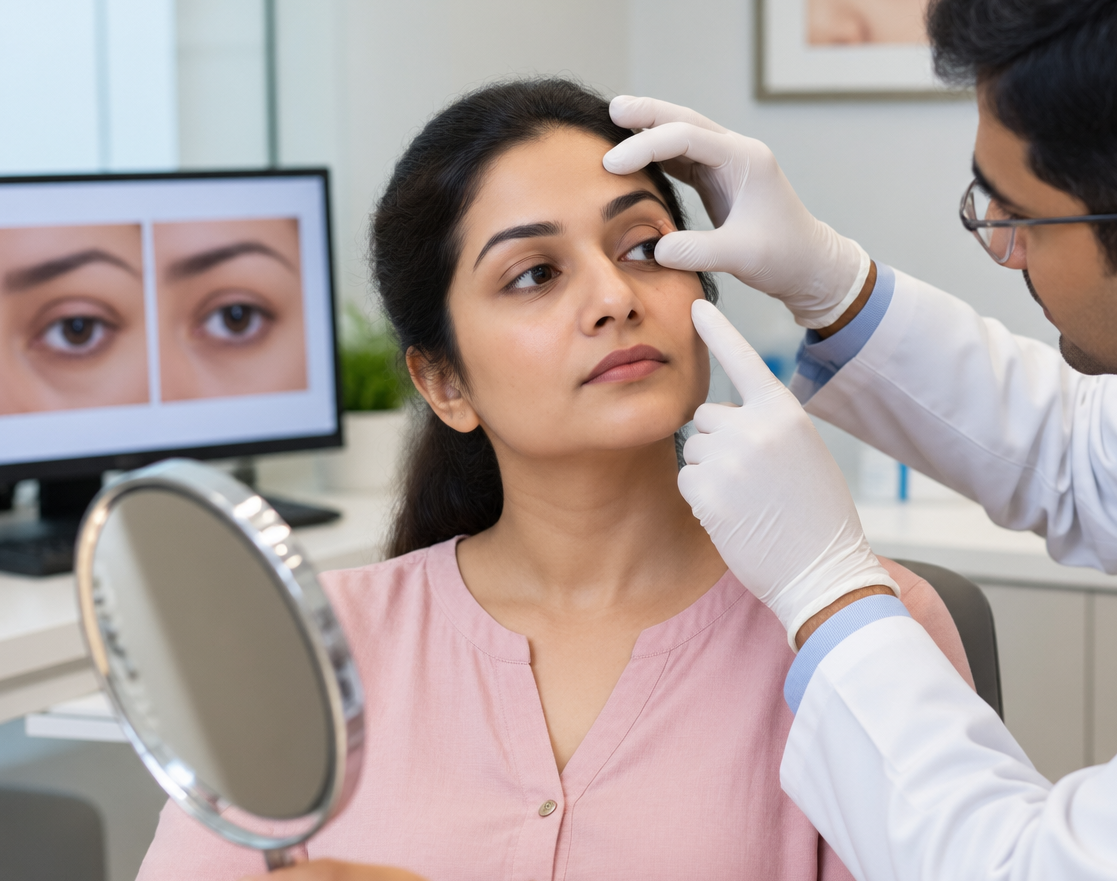
These features can have different causes, so an examination is necessary before determining whether surgery is appropriate.
Cosmetic Concerns Need Proper Assessment
Not every tired-looking eye is caused by excess eyelid skin.
Brow position, facial volume, skin quality and the anatomy around the eyes can influence appearance. Treating the wrong anatomical problem may produce an unsatisfactory result.
A plastic surgeon therefore evaluates the eyelids in the context of the surrounding face rather than viewing them as isolated structures.
What Makes Someone Ready for Surgery
Readiness involves more than wanting a cosmetic change.
A suitable candidate should understand what surgery can reasonably improve, be prepared for a recovery period and disclose relevant medical information.
Patients should discuss eye conditions, previous procedures, medications and general health during consultation.
Realistic expectations are particularly important. Eyelid surgery may improve selected age-related changes, but it does not stop future ageing.
Ask About Scar Placement
Incisions are planned according to the procedure being performed and the individual's anatomy.
Patients should ask where scars are expected, how they generally mature and what postoperative care may be required.
Swelling and bruising can occur after surgery, meaning patients should plan social and professional commitments with sufficient recovery time in mind.
Provider Selection Deserves Care
The eye area contains delicate structures, making appropriate surgical training and anatomical understanding important.
When selecting a surgeon, ask about:
- Professional qualifications
- Experience with eyelid procedures
- Surgical facility
- Expected recovery
- Possible complications
- Follow-up arrangements
- Management of unexpected concerns
Before-and-after photographs can help demonstrate a surgeon's approach, although another patient's result cannot predict your own.
Local Follow-Up Is Valuable
Patients seeking eyelid surgery in Jaipur may benefit from having postoperative care reasonably accessible, especially during the early healing period.
People travelling from elsewhere in Rajasthan should ask how long they should remain nearby after surgery and when follow-up visits are expected.
At Dr. Nakul Somani's practice, eyelid concerns are evaluated according to the patient's anatomy and the specific changes they hope to address rather than using one standard surgical plan.
Know What Would Make You Reconsider
A responsible consultation may sometimes result in a recommendation to delay surgery or consider another approach.
If expectations are unrealistic, an underlying eye problem requires attention or the perceived concern originates from another facial structure, proceeding immediately may not be appropriate.
Eyelid surgery is therefore best approached as a targeted procedure rather than a general solution for facial ageing. Patients who understand their specific concern, expected recovery, limitations and possible risks are better positioned to decide whether blepharoplasty aligns with their goals.
Keywords