Deciding to undergo breast augmentation is a significant personal and medical decision. While photographs and implant sizes often dominate online discussions, the most important part of the process is determining whether surgery is appropriate for your anatomy, expectations and long-term plans.
A thorough consultation should help you understand both the aesthetic possibilities and the practical realities of surgery.
Be Clear About Your Main Goal
Breast augmentation may be considered by patients who want greater breast volume, improved proportion or correction of selected asymmetry.
Changes after pregnancy, breastfeeding or weight loss can also lead someone to explore augmentation.
However, loss of volume and breast sagging are different concerns. When substantial drooping is present, an implant alone may not create the desired position or shape.
This distinction should be established during physical assessment.
Ask How Implant Selection Is Made
Implants should not be chosen based only on a number of cubic centimetres.
Selection may involve breast width, chest dimensions, existing tissue, skin characteristics, projection and the desired overall appearance.
Ask the surgeon to explain why a particular range is being considered for your anatomy.
A photograph of someone else's result can communicate aesthetic preferences, but it cannot determine what implant will produce the same appearance on another body.
Discuss Scars Before the Procedure
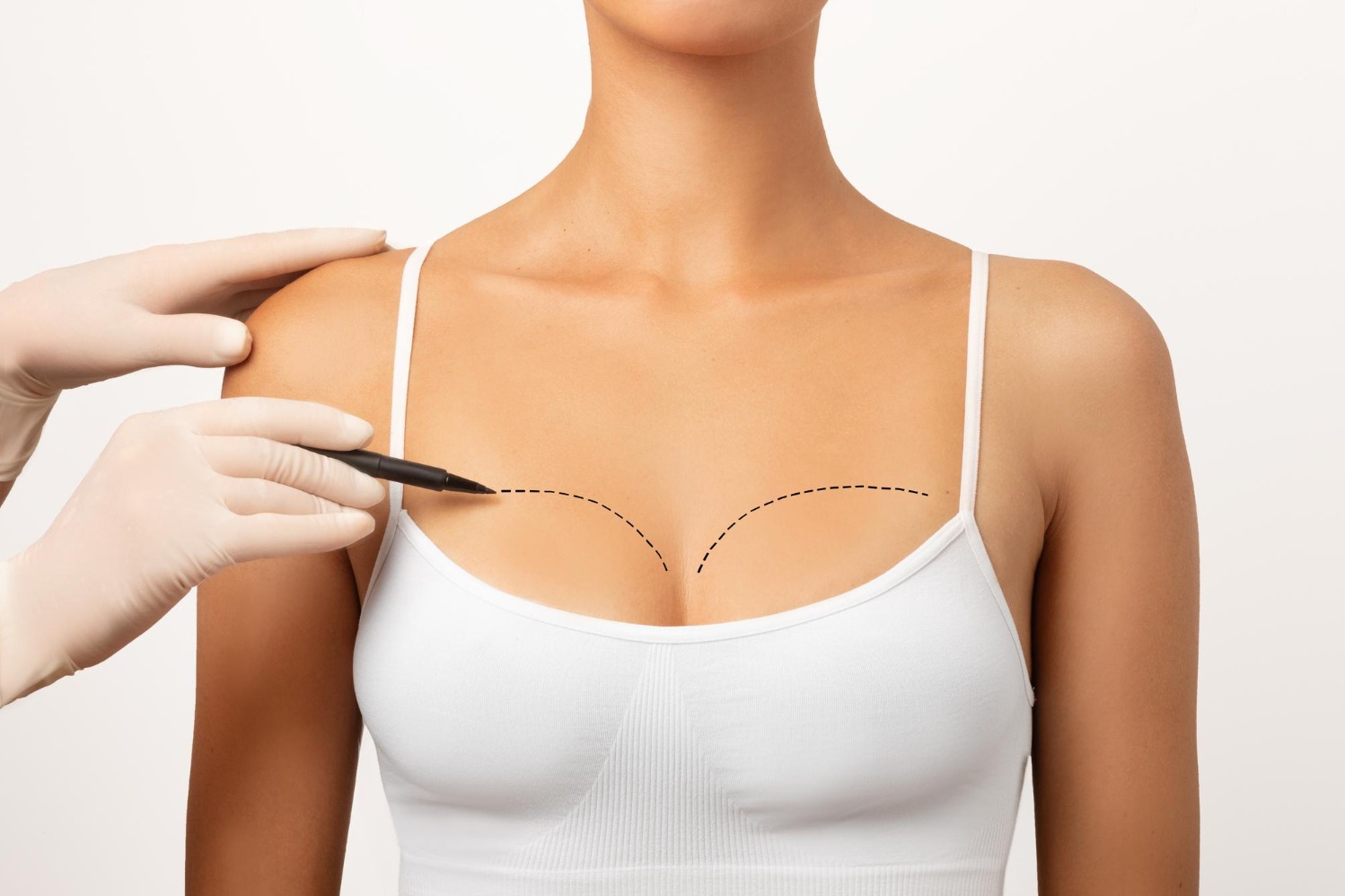
Every surgical breast augmentation involves an incision.
The location and expected appearance of scars should be explained before surgery. Scar development varies between patients and changes over time as healing progresses.
Patients with a history of unusual scarring should make this known during consultation.
Understand Long-Term Implant Considerations
One of the most useful questions to ask is what breast implant ownership may involve over the years.
Breast implants are not automatically lifetime devices. Future monitoring, additional surgery, implant replacement or removal may become necessary depending on individual circumstances.
Patients should receive information about implant-related complications as well as general surgical risks.
Review Recovery Realistically
Before scheduling surgery, ask about expected limitations during the first days and weeks.
Recovery guidance may cover:
- Returning to desk work
- Driving
- Sleeping positions
- Arm movement
- Lifting
- Exercise
- Support garments
- Wound care
- Follow-up appointments
People with physically demanding jobs may require different planning from those who work primarily at a desk.
Check the Surgeon's Qualifications
When searching for breast augmentation in Jaipur, patients should evaluate the surgeon rather than relying only on social media photographs, package prices or promotional claims.
Important questions include:
- What are the surgeon's qualifications?
- Who will actually perform the procedure?
- Where will surgery take place?
- What type of implant is being proposed?
- What complications should I understand?
- How is postoperative follow-up managed?
- What happens if I develop a concern after surgery?
Dr. Nakul Somani consults patients seeking plastic and cosmetic surgery in Jaipur, with breast surgery planning based on individual anatomy and aesthetic objectives.
For people travelling from across Rajasthan, accessibility for follow-up should also be part of provider selection.
Make the Decision Without Rushing
A useful consultation should leave enough room for questions. Patients should understand the recommended procedure, alternatives, scars, recovery, risks and realistic outcome before giving informed consent.
Breast augmentation should not be treated as a simple purchase based on implant size. It is surgery with immediate and long-term considerations. Choosing an appropriately qualified surgeon, understanding your anatomy and establishing realistic expectations are central to making a well-informed decision.
Keywords